Rethink & Reuse
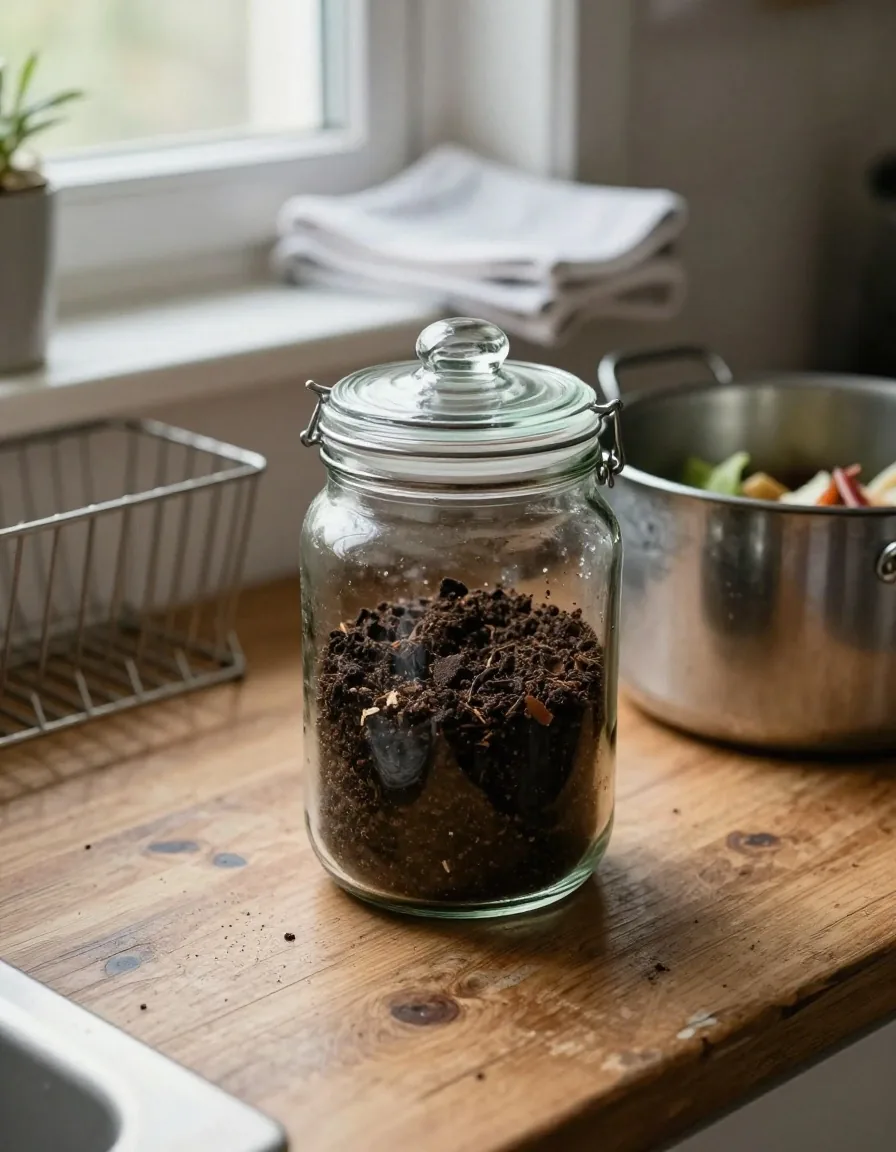
A glass jar of finished compost on a wooden kitchen counter next to a small caddy of vegetable peelings

Two weeks of peelings, one jar of crumbly compost, and a kitchen that stopped binning its scraps.

Composting at home

Composting food scraps at home

Composting turns kitchen and garden waste into something genuinely useful, and it's one of the few waste habits that hands you a product at the end. In a UK setting it works year-round with the right setup, though the method you pick depends on whether you have any outdoor space at all.

A small routine, not a chore: two minutes a day keeps a bin, a wormery or a bokashi bucket working.

What you can and can't compost

Getting this right prevents most compost problems before they start. Fruit and vegetable scraps, tea leaves, coffee grounds, eggshells and garden clippings all compost well. So do torn cardboard and paper, in moderation. Keep the mix simple and the bin stays sweet.

Goes in, happily

Vegetable and fruit peelings, tea bags (check for plastic), coffee grounds and filters, crushed eggshells, grass clippings, dry leaves, torn cardboard, plain paper.

Best kept out

Meat, fish, dairy and cooked food in a standard garden bin — they attract pests and smell. Pet waste and diseased plants belong elsewhere entirely.

Handled separately

If you do want to compost cooked food and small amounts of meat, an indoor bokashi system ferments them in a sealed bucket first.

Greens and browns, in plain terms

Compost needs a balance of wet, nitrogen-rich "greens" and dry, carbon-rich "browns". Too many greens and it goes slimy and smelly; too many browns and it breaks down very slowly.

  • Greens: vegetable scraps, fruit peelings, grass, coffee grounds
  • Browns: torn cardboard, paper, dry leaves, straw
  • A rough rule is roughly equal volumes, adjusted as you go

Smells sour? Add browns. Dry and doing nothing? Add greens or a little water.

Choosing your system

Outdoor or indoor, it depends on your space

If you have a garden, a standard compost bin or an open heap is the simplest option. It takes garden waste and raw kitchen scraps, and nature does most of the work. A bin with a lid keeps the rain out and the heat in, which matters through a wet British winter.

Garden bin or heap

A square plastic bin or a covered heap in a corner works with what your garden already produces. Site it on soil rather than paving so worms and microbes can move in from below. Add raw kitchen scraps alongside the garden waste and turn it now and then when you remember.

Best for households with a garden, a yard, or even a decent-sized balcony with room for a small bin.

Wormery

Worms process food scraps and give you liquid feed alongside solid compost. It needs a bit more attention than a bin but the output is excellent for pots and window boxes. Keep it out of direct sun and don't overload it with citrus or onions.

Bokashi bin

A sealed bucket that ferments everything, including cooked food and small amounts of meat. It lives happily on a kitchen floor or a balcony, and it's the usual pick for a flat with no outdoor space at all.

Getting the mix right

A working ledger for the bin

Most bin problems are a numbers problem in disguise. Work down the left column, act on the right, and the bin settles within a few days.

What you notice

The bin smells sour or slimy

What to do

Too many wet greens. Add torn cardboard or paper, then turn the pile to let air in.

What you notice

The bin is cold and slow

What to do

Usually too dry or short on greens. Add kitchen scraps and a little water, then turn again.

What you notice

Fruit flies hovering

What to do

Exposed food scraps. Bury every new addition under the surface layer of browns.

What you notice

Wet, matted clumps

What to do

Add cardboard and mix it through. Dry and dusty instead? Add water and greens.

What you notice

Rats or mice visiting

What to do

Food scraps left on the surface. Switch to a sealed bin and turn regularly.

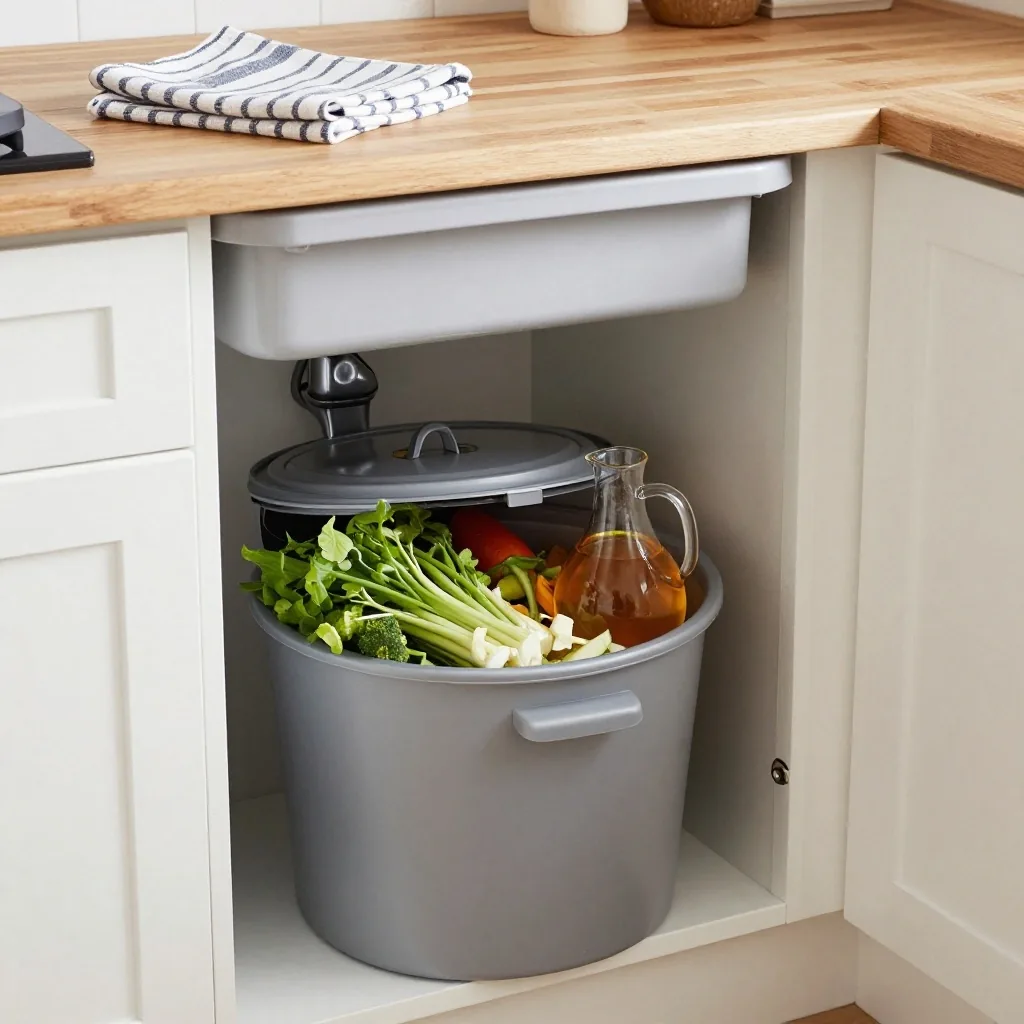
A bokashi bucket under a kitchen sink beside a bowl of vegetable scraps

Sealed, compact, and happy in a flat kitchen — the bokashi bucket fits where a garden bin cannot.

Composting in a small UK kitchen

Indoor systems solve the space problem. A bokashi bin is the easiest fit for a flat: it's sealed, so it doesn't smell if used properly, and it takes a wider range of food than an outdoor bin ever will. You add a bran inoculant, drain the liquid every few days, and after a few weeks bury the fermented contents or add them to a garden bin.

A wormery needs a bit more attention but produces excellent compost for pots and planters. Keep it out of direct sun, don't overload it with citrus or onions, and give it a home where you'll actually walk past it. Both systems are compact and work in a standard kitchen or under a sink, as long as you keep up with them.

Where it fits in a low waste home guide

Composting sits alongside the other zero waste kitchen swaps you'd make in the same room: plastic free food storage in jars and tins, a reusable produce bags guide for the weekly shop, and beeswax wraps usage and care for the bits that never get eaten.
Common problems and fixes

Almost every problem has a simple adjustment

Most compost issues come down to balance and moisture. None of them need a specialist answer or a new system — a version of the mix ledger above usually does the trick within a few days.

The bin smells

Usually too many wet greens and not enough dry browns. Add cardboard or paper, turn the pile, and it should settle within a few days. If it doesn't, there's likely a pocket of something wet trapped in the middle — dig it out and mix it back in.

Nothing is happening

A cold, quiet bin is often too dry or short on greens. Add fresh kitchen scraps and a splash of water, then turn. Smaller pieces break down faster, so chop anything woody or whole before it goes in.

Fruit flies in the kitchen

They mean exposed food scraps, not a spoiled bin. Bury each new addition under the surface layer of browns, and keep the kitchen caddy emptied every day or two into the main system.

Rats and mice

A sign of food scraps sitting on the surface. Use a sealed bin, turn regularly, and avoid adding cooked food to an open heap. If you need to compost cooked food, a bokashi bin indoors keeps it sealed while it ferments.

Using the compost you make

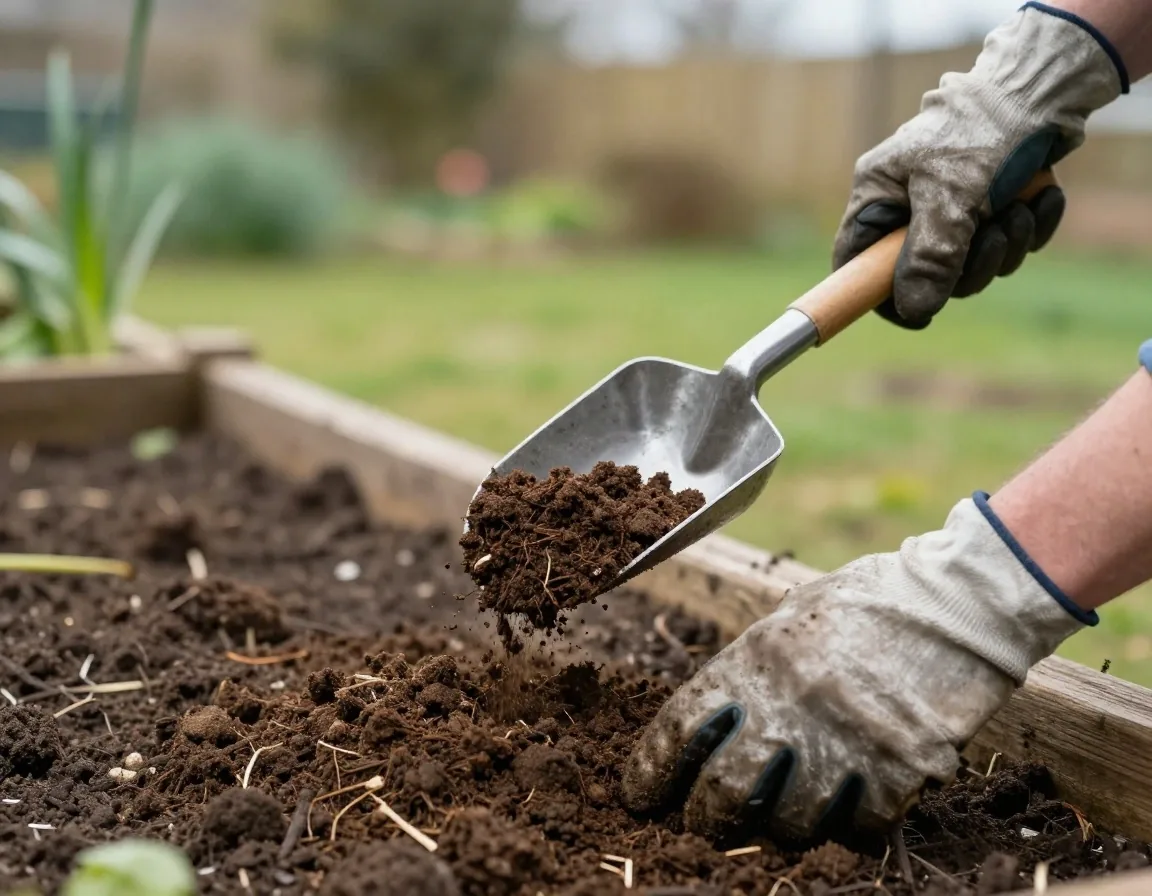
Finished compost looks dark, crumbly, and smells earthy. It's ready when you can't recognise the original materials. Use it as a soil improver, a mulch around shrubs, or a component of potting mix. It feeds your plants and improves soil structure over time.

Bokashi liquid needs diluting before use — roughly one part to a hundred parts water — and works as a plant feed. Wormeries produce both liquid feed and solid castings. None of these replace every nutrient a plant needs, but they're a free, steady supply from waste you'd otherwise bin.

Hands tipping dark crumbly compost from a metal scoop onto a raised garden bed

Finished compost, ready for a raised bed — dark, crumbly, and smelling of damp forest floor.

Fitting composting into your week

Composting works best as a small routine rather than a chore. Keep a container in the kitchen for scraps, empty it into your system every day or two, and add browns as you go. That's the whole job — a couple of minutes, and the system stays healthy.

If you live in a flat and can't manage a full system, check whether your council offers a food waste collection. Many do, and it's a good fallback that still keeps scraps out of general waste. Either way the goal is the same: food scraps out of the bin and back into use.

Keep the habit going

Composting is one piece of a wider shift at home. If you're just starting out, the zero waste starter guide walks through the first changes worth making, and the kitchen swaps page covers the storage and cleaning side of the same room.

Questions about a wormery or a bokashi bin? Send us a note and we'll point you at the right starting size.

Questions we get most

Composting questions, answered plainly

The three things people ask before they start, and the short answers. If your setup doesn't match any of them, the contact page is the fastest route to a proper reply.

Ask about indoor systems
Can I compost in a flat with no garden?

Yes. A bokashi bin or a wormery handles food scraps indoors. Bokashi takes cooked food and small amounts of meat, while a wormery produces compost and liquid feed for pots and window boxes.

Why does my compost smell bad?

Usually too many wet greens and not enough dry browns. Add cardboard or paper, turn the pile, and it should settle within a few days.

How long until compost is ready?

A garden bin can take six months to a year depending on conditions and how often you turn it. Indoor bokashi ferments in a few weeks but still needs a second stage to fully break down.

Start with one bin this week

Pick the system that matches your space, set it up, and give it a fortnight. If you want a hand choosing between a wormery and a bokashi bin, or you're working out how composting fits your council's food waste collection, send us a note — we'll answer with something useful rather than a sales pitch.

Rethink & Reuse, 42 Bramley Road, London, N14 4HR — Monday to Friday, 9:00 AM to 6:00 PM; Saturday, 10:00 AM to 2:00 PM.

Email [email protected] or call +44 20 7946 0731.