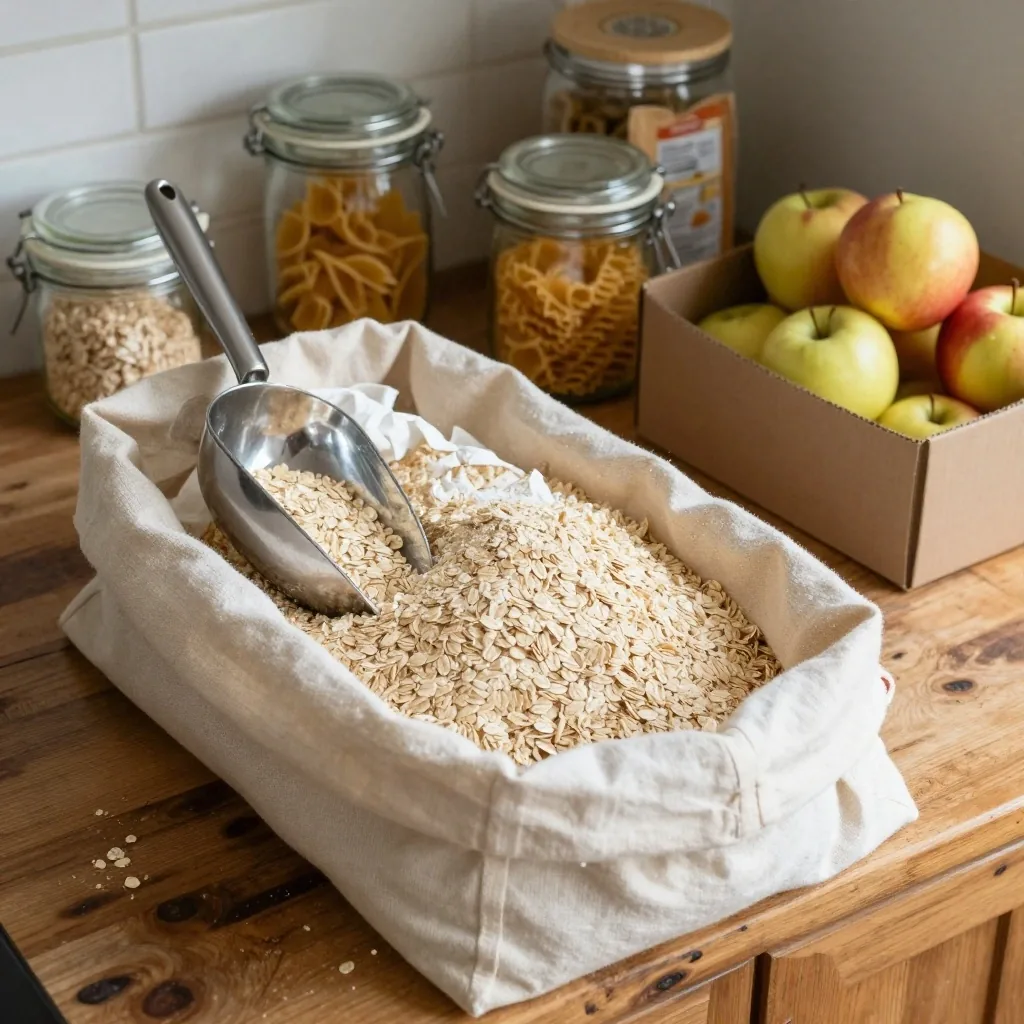
Loose staples, clean jars, one reusable bag — the whole weekly shop in a single trip.
Shopping & kitchen staples
Sustainable shopping and buying in bulk
Where you shop and how you shop changes how much waste leaves your home. Most of it comes down to packaging, buying quantity, and choosing things that last — and none of it needs a special shop. This guide covers buying in bulk, sustainable home essentials, and plastic free alternatives without spending more than you need to.
The first habit
Shop the packaging, not just the price
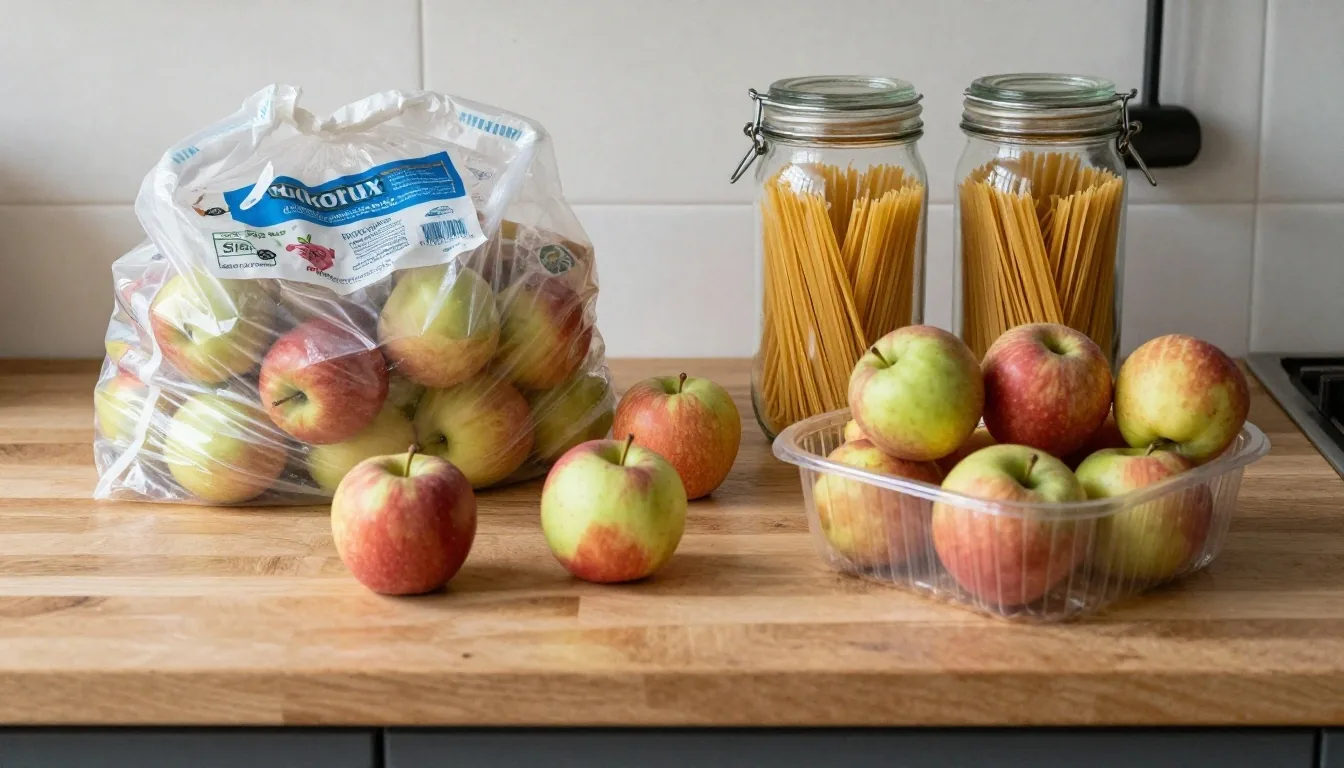
Two identical items on a shelf often differ only in packaging. One comes in a plastic tray wrapped in film; the other is loose or in a card box. Choosing the lower-packaging option is the simplest sustainable shopping habit there is, and it rarely costs more.
Get into the routine of scanning for the version with less wrap. Loose fruit and veg, boxed rather than bagged, refillable rather than single-use. Over a month these choices add up to a noticeably emptier recycling bin.
Same shelf, two decisions
Fruit and vegetables
Loose into a reusable produce bag instead of a pre-weighed film-wrapped tray.
Packaging saved on
every single shop
Dry goods
Card box over a plastic bag wherever both versions sit on the same aisle shelf.
Recyclable,
and lighter to carry
Cleaning and personal care
A refill bottle refilled from a larger container beats a new single-use spray each time.
One bottle,
used for years
Bakery
Loose rolls into your own cloth bag rather than a plastic-lidded tray from the shelf.
Cloth lasts
for years of shops
Drinks
Glass or a refillable container over a multipack of single-use plastic bottles.
The container
outlives the drink
Quantity and storage
How to buy in bulk without waste
Bulk buying cuts packaging per serving and usually the price too. For dry staples like rice, pasta, oats, and flour, a larger bag means less plastic per meal. Decant into jars at home so it stays fresh and the bag can go straight to recycling.
The big bag
Real bulk buying goes further. Refill shops let you bring your own containers and buy exactly the amount you need, no packaging at all. If you have the storage space, buying the biggest size of things you use often is the easiest win.
Decant straight away
Tip the bag into jars the day you get home. You learn in one look how much you actually get through, and the shelf stops being a stack of half-open packets. Labels on the jar keep the decanting honest — flour and icing sugar look identical in a hurry.
Watch the shelf life
Oats, rice, and pasta keep for months in a cool cupboard. Flour and nuts are the ones to watch: buy smaller if you bake rarely, and keep the rest in the freezer when the weather turns warm.
The refill route
If space is tight, refill is the better route because you buy only what fits. It also beats a bulk bag when you live alone or cook for one.
Bring clean, dry containers — damp jars spoil flour fast.
Weigh the empty container first so the shop can subtract it.
Buy a week or two at a time, not a season's worth.
Ask the staff which bins refill most often — that tells you what keeps well.
Refill shops are usually in town centres and market halls; a single trip can cover most of a cupboard.
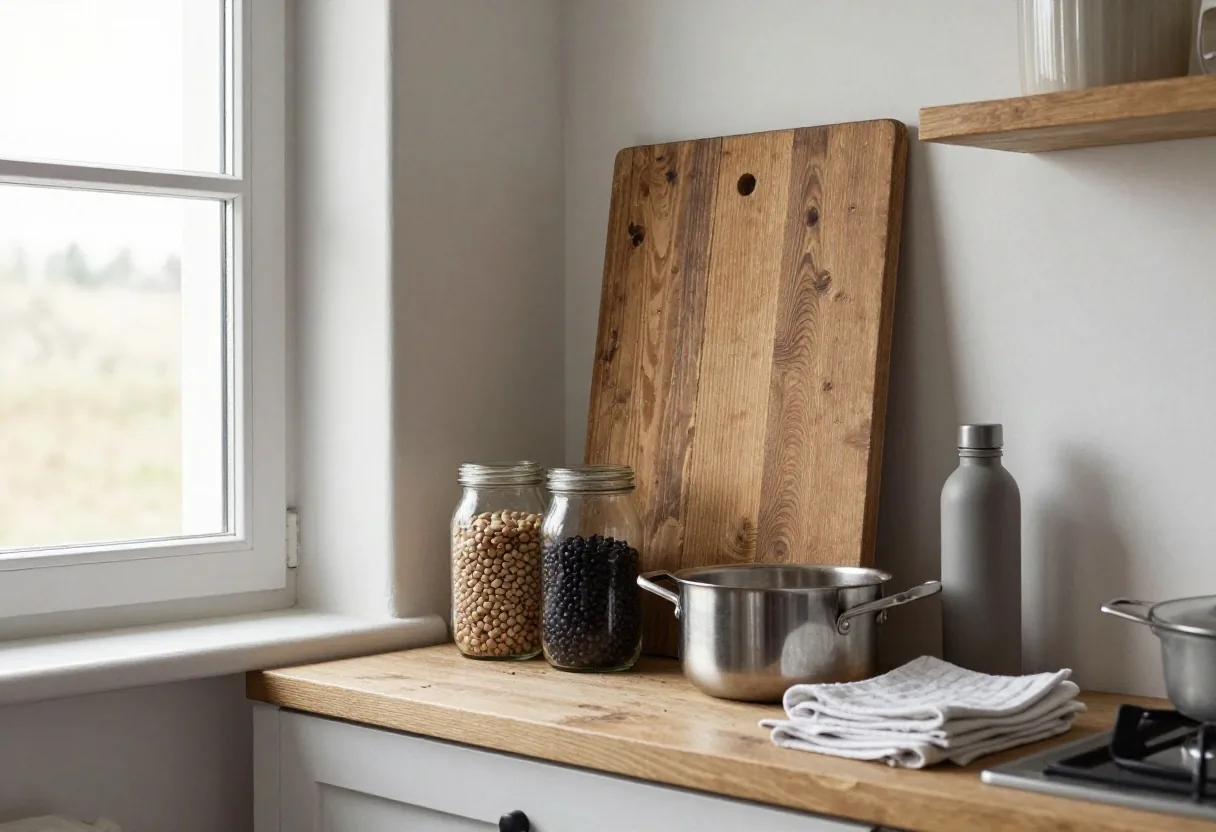
A working cupboard, not a showroom: steel, glass, wood, and cotton — the four materials that keep going.
Buy once, keep it
Choosing sustainable home essentials
The most sustainable item is the one you already own, used for as long as possible. When something genuinely needs replacing, choose a durable version and keep it for years. That applies to everything from kitchenware to cleaning supplies to bedding.
Look at materials with a long life: stainless steel, glass, wood, and natural fibres. They tend to wear better than their cheap plastic equivalents and can often be repaired. It is not about a brand, and it is not about paying a premium for a label.
Match material to job
Stainless steel for pans, boxes, and bottles — dents, scrubs, and keeps going.
Glass for dry storage and leftovers — see what you have before you shop again.
Wood for boards and spoons — never in the dishwasher if you want it to last.
Natural fibres for cloths, towels, and bedding — they wash hotter and last longer.
Repair first — a mended handle beats a new pan every time.
What actually works
Plastic free alternatives that hold up
Plastic free doesn't mean flimsy. The alternatives have improved a lot, and many last longer than what they replace. The key is matching the material to the job so it doesn't fail early and need replacing.
For food, glass and stainless steel are the workhorses. For cleaning, refillable bottles and washable cloths replace a whole shelf of disposables. For personal care, bar soap and shampoo bars cut bottles, though it's worth testing a brand before committing to a bulk order.
Food and leftovers
Glass containers with clip lids and stainless steel lunch boxes replace cling film and takeaway tubs. A spare set lives in the freezer, so nothing needs wrapping.
Kitchen cleaning
One refillable spray bottle plus a stack of cotton cloths. Buy the cleaning concentrate once and mix it yourself — far less packaging than a shelf of new bottles.
Shopping bags
Cloth produce bags and a couple of sturdy totes kept by the front door. They only work if they are visible at the moment you leave — hang them, don't fold them away.
Food wrapping
Beeswax wraps replace film for cheese, half a loaf, and cut veg. Wash them in cool water with a little soap, let them air dry, and they last about a year before a refresh.
Claims versus materials
Read the label without being fooled
Recycling labels and green claims vary, and some are more marketing than substance. The recycling symbols tell you what a material is, not whether your council accepts it. Check your local rules rather than trusting the packet.
Terms like "eco" and "natural" aren't regulated in the same way across products, so they don't guarantee much. What you can rely on is the material, the packaging, and how long the item will last.
Check the material — is it glass, card, steel, or a mixed laminate that cannot be separated?
Check your council — they collect locally, so the same wrapper may be accepted on one street and not the next.
Check the lifespan — a heavier item you keep for years usually beats a light one you replace twice.
Skip the badge — a leaf shape on the front is designed to reassure you, not to tell you anything you can act on.
Habits, not hauls
Making it stick week to week
Habits beat one-off ethical splurges. A weekly shop where you consistently choose loose produce and refill staples does more than an occasional haul of eco products. The aim is to make the low-waste option the default, not the exception.
Keep a running list of things you buy regularly and where each is cheapest and least packaged. Build a small rotation of shops if that helps, or stick to one and work within it. Consistency is what moves the numbers.
Your running list, roughly
Oats, rice, pasta
Big bag or refill bin — whichever is nearer
Fruit and vegetables
Loose, into the cloth bags you keep by the door
Cleaning concentrate
One bottle, refilled — buy twice a year at most
Soap and shampoo bars
Test one bar before ordering a box
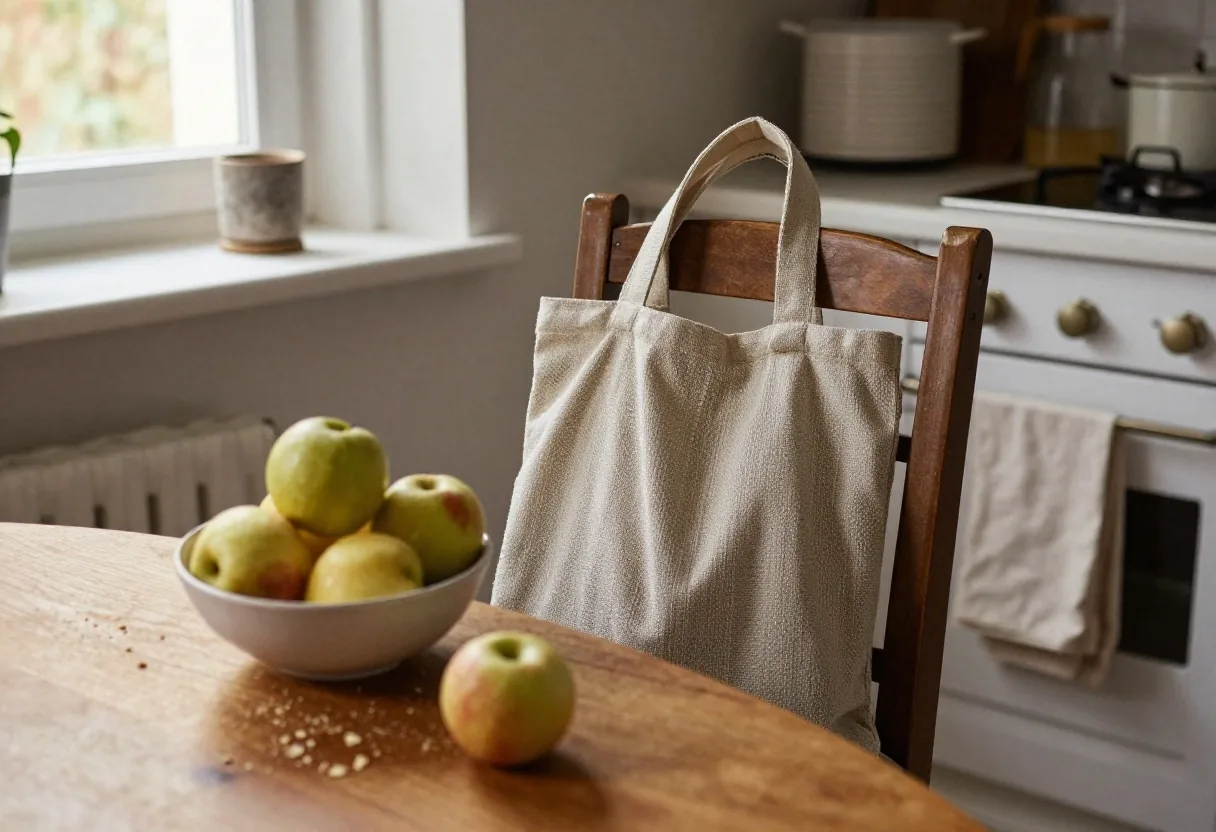
Bags kept visible get used; bags folded into a drawer don't.
Before your next shop
Questions that come up most
Is buying in bulk always better for the environment?
It cuts packaging per serving for things you'll use, but food that spoils before you finish it wastes more than the packaging saves. Buy bulk only for items you get through.
How do I know if my council recycles a material?
Check your council's recycling page rather than the packaging symbol. Symbols tell you what a material is; councils decide what they collect locally.
Are refill shops worth it if I have little storage?
Yes, often more so. Refill lets you buy small amounts without packaging, so you're not storing a large bag you might not finish.
How do I keep upcycling and recycling straight?
Recycling breaks a material down to make something new; upcycling keeps the item whole and gives it a second job. A jar turned into a storage tin is upcycling — the jar never sees a reprocessing plant.
Is plastic free food storage hard to keep clean?
Glass and steel go straight in the dishwasher and scrub clean. Beeswax wraps are the exception: cool water and a little soap, air dry, never hot water, and they will not hold onto smells.
Start with the shop you already do
Pick two changes for this week: one loose item instead of a wrapped one, and one staple bought in a bigger bag or from a refill bin. Everything else on this page follows from those two habits once they're automatic.
If you're building the rest of the house around this, the kitchen and the compost bin are the next useful stops.
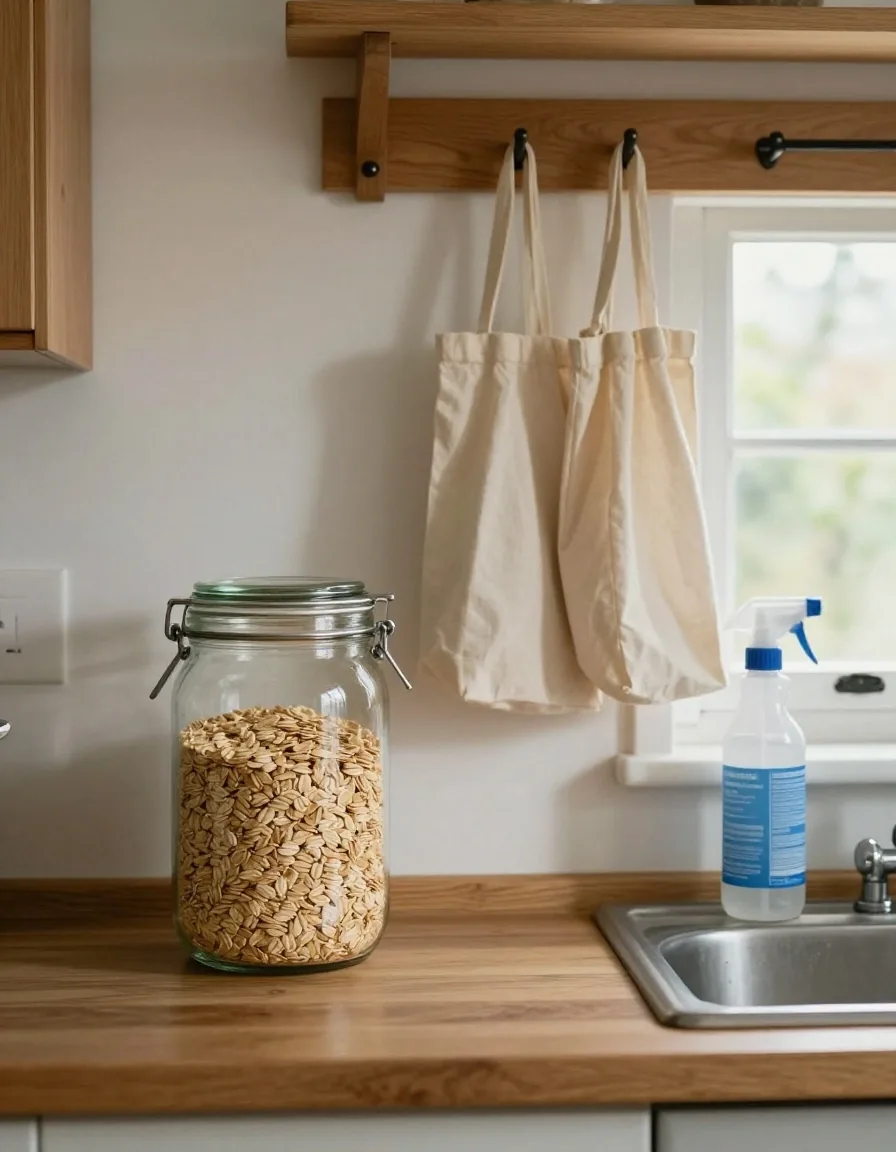
The week's shop already put away — no bag left to unpack tomorrow.
Keep reading
Rethink & Reuse publishes these guides for UK households and answers questions by email on weekdays.