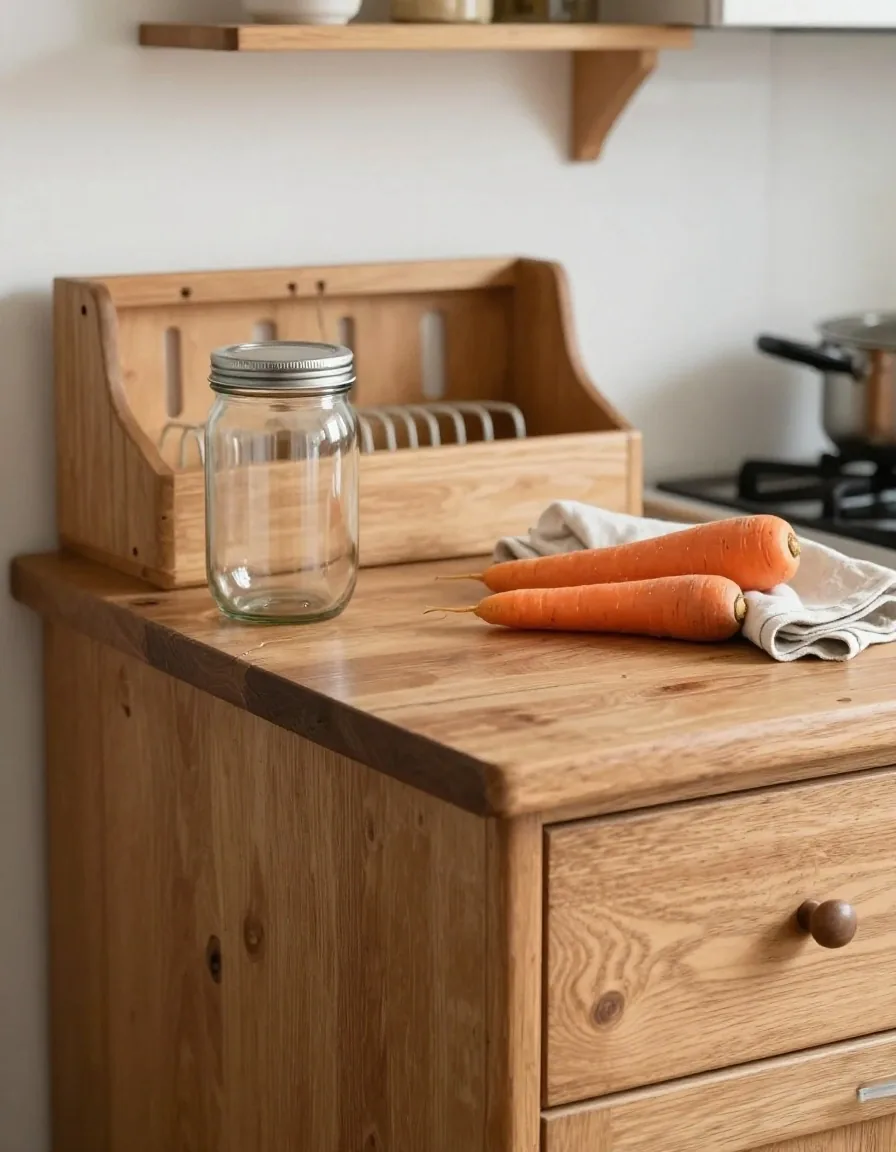
One jar, one week, one honest look at the bin.
Starter guide for beginners
Your first steps to lower waste
If you are new to zero waste living, the advice online can be paralysing. Everyone has a list, the lists contradict each other, and none of them know your kitchen, your council, or your budget. This guide cuts it down to a sequence that works for most UK households, starting with the changes that reduce the most waste for the least effort.
You do not need to finish this page today. Read the first section, try one thing, come back when you are ready for the next.
Start here
How this guide is ordered
The order matters more than the length
Most zero waste tips for beginners arrive as one flat list: bamboo toothbrush, keep cup, cloth bags, done. It is a shopping list, not a plan. A low waste home guide is more useful when it is sequenced, because the first change you make should be the one your household actually produces the most of.
So this page runs in the order that tends to work in real British kitchens: look at what you throw away, cut food waste, intercept packaging, then replace disposables as they run out. Everything after that — the kitchen swaps, the upcycling, the composting — builds on those first four moves.
Look before you swap
A week of noticing tells you which category to attack. Guessing usually sends you at the wrong problem.
Food before packaging
Food waste is the biggest category in most homes and the cheapest one to fix, so it goes first.
Replace on empty
Nothing gets binned to make room for a reusable version. You swap when the old one is finished.
Step one
Work out what you are actually throwing away
You cannot reduce what you have not looked at. Before changing anything, spend one week paying attention to your bin. Not judging it, just noticing. What is the biggest category: food, packaging, or something else? Where does it come from?
A quick way to do this is to keep a note on your phone for seven days. Most people find food and packaging dominate. If your council collects food waste separately, check how full that caddy gets. That number is your baseline, and it tells you which section of this guide to prioritise.
Food
Peelings, tired salad, bread that went hard, the tub at the back of the fridge
Weigh or eyeball the food caddy after seven days. This is usually the biggest single line.
Packaging
Film, trays, bags, bottles, the outer sleeve on things that were already wrapped
Note which aisle most of it came from. That aisle is where your shopping habits change next.
The awkward shelf
Batteries, bulbs, dead cables, old medicines, worn-out clothing
Low volume, high confusion. These need their own drop-off, and there is a section for them below.
Everything else
Bathroom empties, cleaning bottles, paper, the things nobody thinks to count
Worth a glance so you know it is there, but rarely the place to start.
If food wins, start with the next section. If packaging wins, skip ahead to the shopping changes and come back.
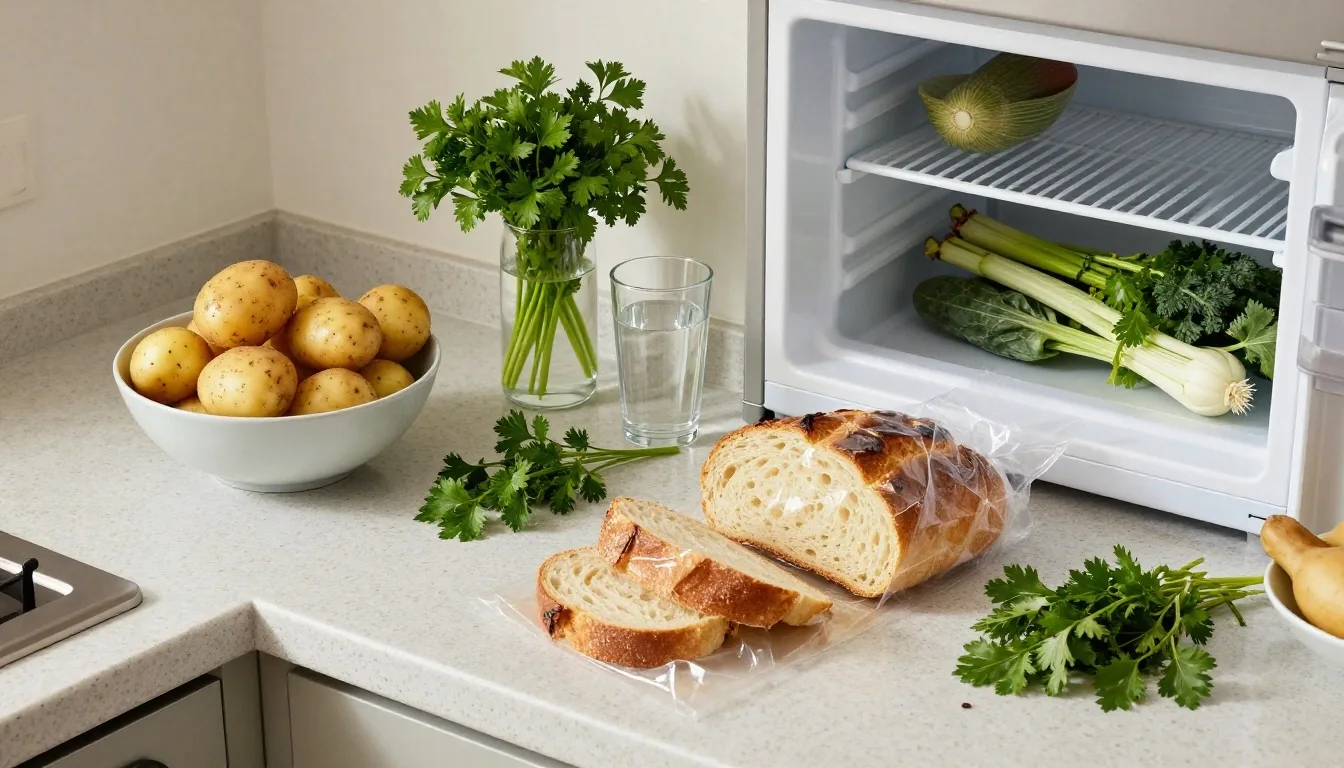
Loose planning, older items pulled forward, bread in the freezer before it turns.
Step two
Start with food, because it is the biggest lever
Food waste is the single largest category in most UK homes, and it is also the easiest to cut because the savings are immediate. The core habits are simple: plan loosely, store properly, and eat leftovers. None of them require apps or spreadsheets.
A loose plan means deciding a few dinners for the week rather than all seven. Shop for those, then improvise the rest from what is left. Store herbs in water, keep bread in the freezer if you will not finish it, and put older items at the front of the fridge. These small moves stop the quiet rot at the back of the shelf.
The three habits, in plain terms
- Plan a few dinners, not seven. Shop for those, improvise the rest.
- Store what spoils fastest where you will see it first.
- Eat leftovers on purpose, the day after, not whenever.
Worth knowing
A scraps container in the freezer takes up one shelf corner and turns peelings into stock later. It is the only piece of kit this section really asks for.
Once food waste is down
Now the packaging, and the disposable shelf
These two steps get confused with each other. Packaging is about what comes into the house. Disposables are about what leaves the cupboard. Handle them in that order and the second one costs you very little.
Step three
Swap the packaging that comes through your door
The trick is to intercept packaging before it enters the house. Keep reusable bags, a couple of containers, and produce bags where you will actually grab them on the way out — by the front door or already in the car, not folded in a drawer.
At the supermarket, loose fruit and veg usually costs the same or less than wrapped. Bread, cheese, and deli items can often go in your own container if you ask. For dry goods, bulk or refill shops let you bring your own jars. You will find the full breakdown in the sustainable shopping guide.
What goes in the bag
- Two or three bags you will actually carry
- A couple of containers for deli and cheese counters
- Reusable produce bags for loose fruit and veg
- Empty jars if you are heading to a refill shop
Step four
Replace disposables as they run out
This is the most misunderstood step. The point is not to throw away your plastic and buy eco replacements. It is to replace items only when they are finished or broken, and choose a reusable version then. That way you are not creating waste to reduce waste.
So when the washing-up liquid runs out, refill it. When the cloths wear through, buy washable ones. When the cling film runs out, try beeswax wraps or lidded containers. This spreads the cost over months and keeps the change gradual, which makes it stick.
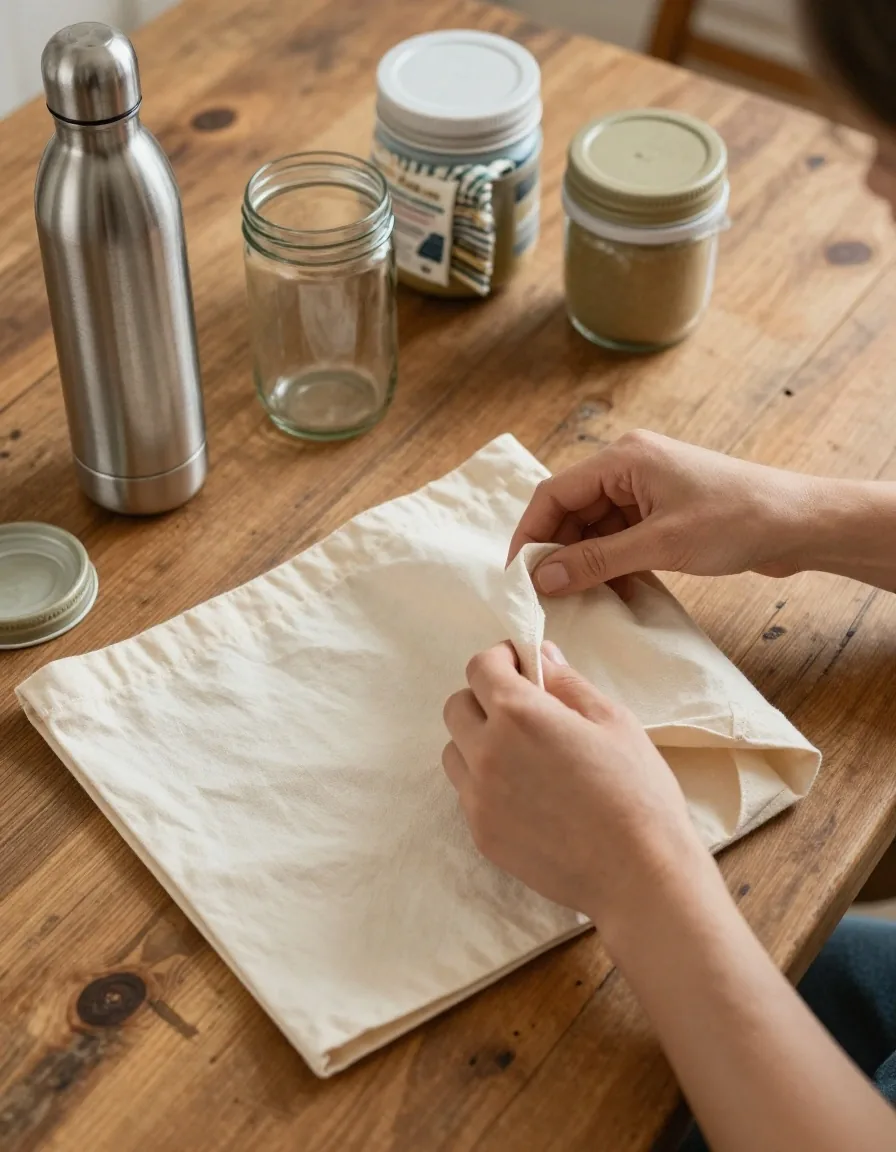
Most of this was already in the cupboard, or about to be replaced anyway.
Step five
A small, honest zero waste starter kit
You can begin with almost nothing. But a few items make the habits easier, and they are worth having if you do not already own something that does the job. A scraps container for the freezer. Two or three reusable bags. A water bottle you will actually carry.
Notice what is missing from that list: bamboo cutlery sets, metal straws, and matching glass jars. Those are fine to buy if you will use them, but they are not what reduces waste. The best starter kit is the one built from things you already have and replace only as needed.
Usually worth buying
- A scraps tub for the freezer
- Two or three reusable bags
- A water bottle you like carrying
- Washable cloths for the kitchen
Fine to skip for now
- A matching set of refill jars
- Travel cutlery you will not carry
- Metal straws bought in a bundle
- Any bin replaced before it wears out
Step six
Handle the awkward items instead of avoiding them
Some waste does not fit neatly into food or packaging. Batteries, light bulbs, e-waste, and medicines need specific disposal and should not go in the general bin. Most UK councils provide drop-off points, and some supermarkets take batteries and soft plastics.
Batteries and bulbs
Never the general bin. Many supermarkets have a collection point by the door.
Empty a jar by the front door and drop them in until you are passing.
Electricals
Cables, chargers, small appliances. Council recycling centres take them.
Some retailers take old small appliances back when you buy a replacement.
Medicines
Return to a pharmacy. Do not flush them and do not bin them.
Any pharmacy counter will take them, no appointment needed.
Clothing
Wearable goes to charity shops and textile banks. Worn out gets repaired first.
Rags and repairs both beat disposal. See the upcycling guide for the rest.
Clothing is its own category. If it is wearable, charity shops and textile banks take it. If it is worn out, it can often be repaired or turned into cleaning rags before you think about disposal. The upcycling guide covers what to do with items that have reached the end of their first life.
Step seven
Set a pace you can keep
The biggest reason people abandon zero waste habits is trying to do everything at once. A week of perfect behaviour followed by a collapse into old routines helps no one. Pick one change, hold it for a fortnight, then add another. That is slower than the internet suggests and far more likely to last.
Expect to slip. Expect some purchases to be wrapped in plastic no matter what you do. The measure of progress is your bin over a season, not any single day. Keep the direction and let the pace be whatever your household can manage.
One change, two weeks, then the next. Nothing on this page needs to happen this month.
Step eight
When you are ready to go further
Once the basics are steady, there is more to explore. Composting turns food scraps into something useful. Upcycling gives worn items a second purpose. Buying in bulk and choosing refill options deepens the shopping habits. Each of these builds naturally on the starter steps.
You do not have to do them all. Many households settle into a comfortable routine and stop there, and that is a real result. If you want to keep going, the guides are waiting, and you can always send us a question when something does not fit your situation.
Common questions
Things beginners ask before they start
What is the single best first step?
Look at your bin for a week before changing anything. That tells you whether food, packaging, or something else is your biggest category, so you can start where it counts.
Do I need to buy a zero waste starter kit?
Not really. Most useful starter items are things you already own or are about to replace anyway. Buy reusables when the disposable runs out, not before.
How do I handle waste my council will not collect?
Batteries, bulbs, e-waste, and medicines need specific drop-off points. Check your council's recycling page, and use supermarket collection points for batteries and soft plastics where available.
Does any of this actually cost more?
Not in the order this guide runs. Cutting food waste saves money straight away. Loose produce usually costs the same as wrapped. The costs only appear if you buy a matching set of reusables before you need them.
Start with one week of noticing, then pick one change
That is the whole method. Look at your bin, cut the biggest category first, and add the next habit when the last one feels ordinary. Questions about a specific kitchen, council, or shared house are welcome — we answer them by email and over the phone during working hours.
Ask us directly
- Email [email protected]
- Phone +44 20 7946 0731
- 42 Bramley Road, London, N14 4HR, United Kingdom
- Monday to Friday, 9:00 AM – 6:00 PM. Saturday, 10:00 AM – 2:00 PM.
Rethink & Reuse is an educational UK resource. We publish practical guides on lower-waste kitchens, refill shopping, composting, and reuse projects — we do not sell the products we write about.